
Baylor County Bench Warrants Search
Baylor County bench warrants are kept on file at the courthouse in Seymour. This rural North Texas county has around 3,500 residents, making it one of the least populated counties in the state. Court activity is low compared to bigger areas, but judges still issue bench warrants when people miss court or fail to pay fines. The Sheriff's Office maintains the active warrant files and handles enforcement. The County Clerk stores all related court records. If you want to look up a bench warrant in Baylor County, a phone call is the quickest way. State databases also carry Baylor County warrant data for those who prefer to search online.
Baylor County Overview
Baylor County Sheriff and Warrants
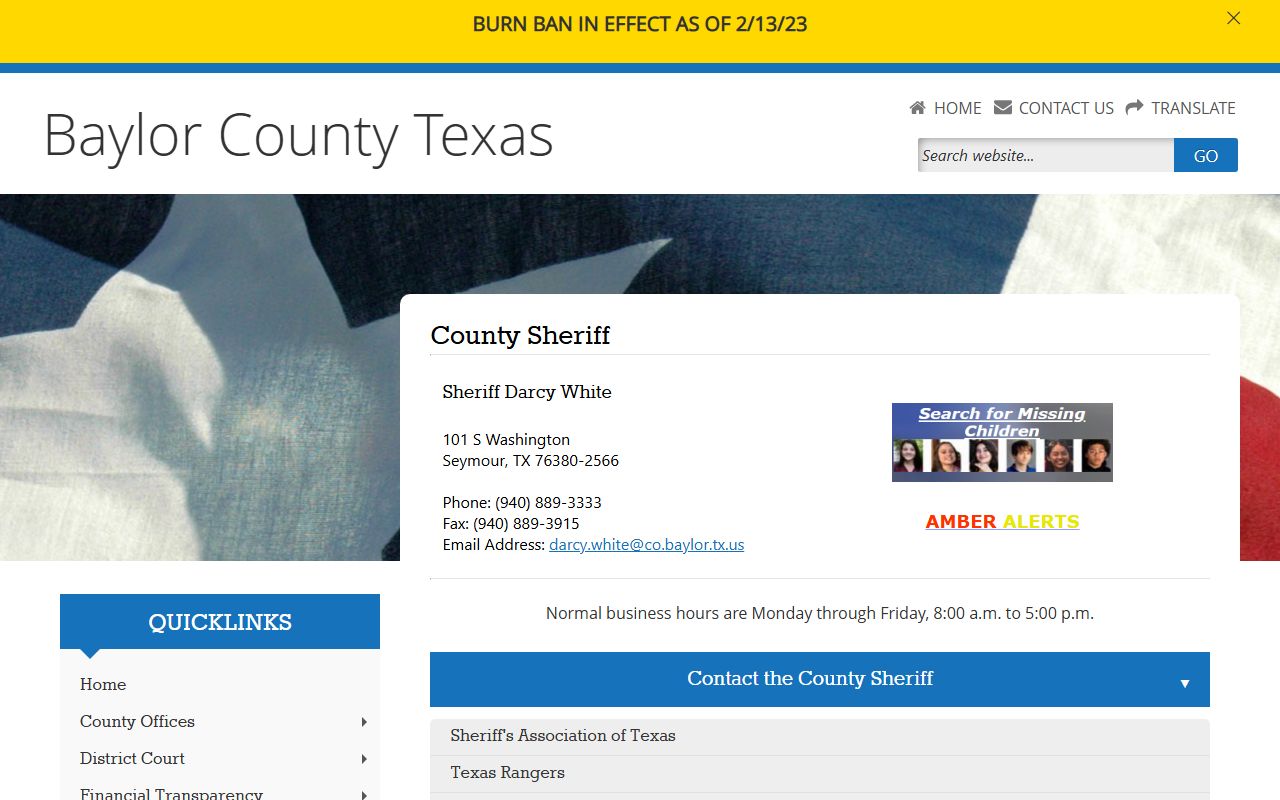
The Baylor County Sheriff's Office is responsible for serving all warrants in the county, including bench warrants. With a small staff covering a rural area, the Sheriff handles everything from traffic enforcement to warrant service. Call (940) 889-3333 during business hours to ask about active bench warrants. The office verifies warrants by phone.
The Sheriff coordinates with neighboring counties for regional warrant enforcement. This is common in rural North Texas where counties are large and populations are small. A bench warrant from Baylor County gets entered into state databases, meaning law enforcement in any Texas county can see it. The Texas Department of Public Safety maintains the statewide system that tracks all reported warrants.
| Office | Baylor County Sheriff's Office |
|---|---|
| Address |
Baylor County Courthouse 101 S. Washington Seymour, TX 76380 |
| Phone | (940) 889-3333 |
| Hours | Monday through Friday, 8:00 AM to 5:00 PM |
| Website | Baylor County Sheriff |
Baylor County Court Records and Bench Warrants
The Baylor County Clerk maintains all court records tied to bench warrants. The clerk's office is at the courthouse on South Washington in Seymour. You can visit during business hours to ask for case files. Call (940) 889-3322 for basic information over the phone.
Because of the county's small size, records are kept manually. Do not expect an online portal or digital search tool. Older case files are paper records stored at the courthouse. The clerk can pull them if you provide a name or case number. Newer cases may be in the computer, but access still requires going through the clerk. This is typical for rural Texas counties with limited technology budgets.
The clerk handles records for the County Court and Justice of the Peace court. Misdemeanor bench warrants, traffic case warrants, and capias pro fine orders all flow through this office. For felony cases, the District Clerk keeps those records separately.
Note: Court records in Baylor County are public, but you may need to wait while staff locates older paper files.
Searching for Baylor County Bench Warrants
The Baylor County website has basic information about county offices and how to reach them. For warrant-specific searches, you will need to use other tools.
The Texas DPS criminal history system covers Baylor County. Register for an account, pay the search fee, and run a name search. The results include bench warrants, arrests, and criminal history that Baylor County has reported to the state. The Texas Office of Court Administration is also expanding statewide access to court records, though smaller counties like Baylor may not have full online coverage yet.
For the most current data, call the Sheriff directly. State databases sometimes lag behind, especially for small counties. A phone call to Seymour gets you real-time information from the people who actually maintain the files.
Common Causes of Bench Warrants in Baylor County
Failure to appear is the top reason. A judge sets a date. The person does not come. The bench warrant gets signed. In Baylor County, the County Court and JP court both issue these warrants regularly. Even in a county this small, people miss court dates.
Unpaid fines come next. The JP court handles traffic cases and Class C offenses. When someone does not pay what they owe, the court issues a capias pro fine warrant. This tells the Sheriff to arrest the person and bring them in. It is a bench warrant by another name. The result is the same. You can be taken into custody and held until you see the judge.
Probation violations are less common in a county this size, but they do happen. If someone on probation violates a condition, the judge issues a bench warrant. These tend to be more serious than fine-related warrants.
Texas law under Chapter 15 of the Code of Criminal Procedure governs how all these warrants get issued and served. The rules are the same whether you are in Baylor County or Harris County.
Resolving a Baylor County Bench Warrant
Take care of it. That is the short version. The longer version is that you have options, and most of them work better if you act before getting arrested.
Call the court. The County Clerk at (940) 889-3322 can tell you about your case. Ask what you owe or what hearing you missed. In a small county, the staff often knows the docket well. They can point you toward the right judge or office. Ask if you can get a new court date set. Many judges allow it when a person reaches out voluntarily.
- Call the County Clerk for case information
- Ask the JP court about payment plans
- Consider hiring a lawyer to recall the warrant
- Voluntary surrender shows good faith
- Check your record through DPS Crime Records
A Texas defense attorney can file a motion to recall the bench warrant. The judge reviews it and can withdraw the warrant if they agree. This avoids an arrest. In Baylor County, where everyone knows everyone, handling things the right way matters more than you might think.
Nearby Counties
Baylor County sits in rural North Texas. These neighboring counties coordinate with the Baylor County Sheriff for warrant enforcement across the region.